On any chart in Zexca's Market Watch, the Analysis button asks Milo to read the chart in front of you: the instrument and the timeframe you picked, on live prices. What comes back is not a paragraph of opinion. It ends in a call and a plan you can check.
Here is how to read one, part by part.
1. The call
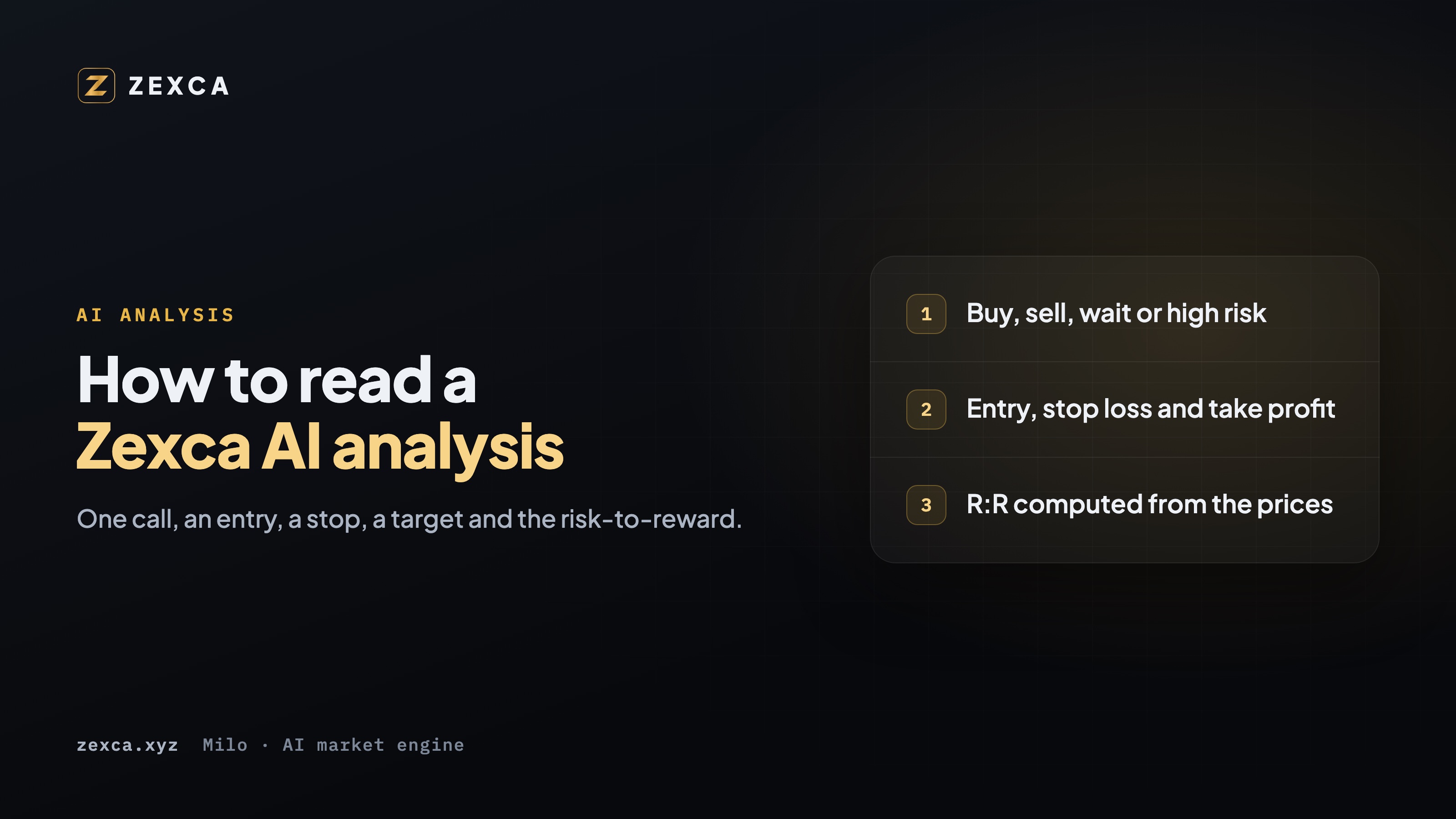
Every analysis ends in one of four words:
- Buy: the chart favours a move up from here, and there is a setup to act on.
- Sell: the same, downward.
- Wait: there is no clean setup right now. This is an answer, not a failure. Most of the time, the best trade is no trade.
- High risk: the chart is moving too fast or too erratically for a stop to mean much. Stand aside or size down hard.
Treat wait and high risk as seriously as buy and sell. An analysis that says wait has just saved you a bad entry.
2. Entry, stop and target
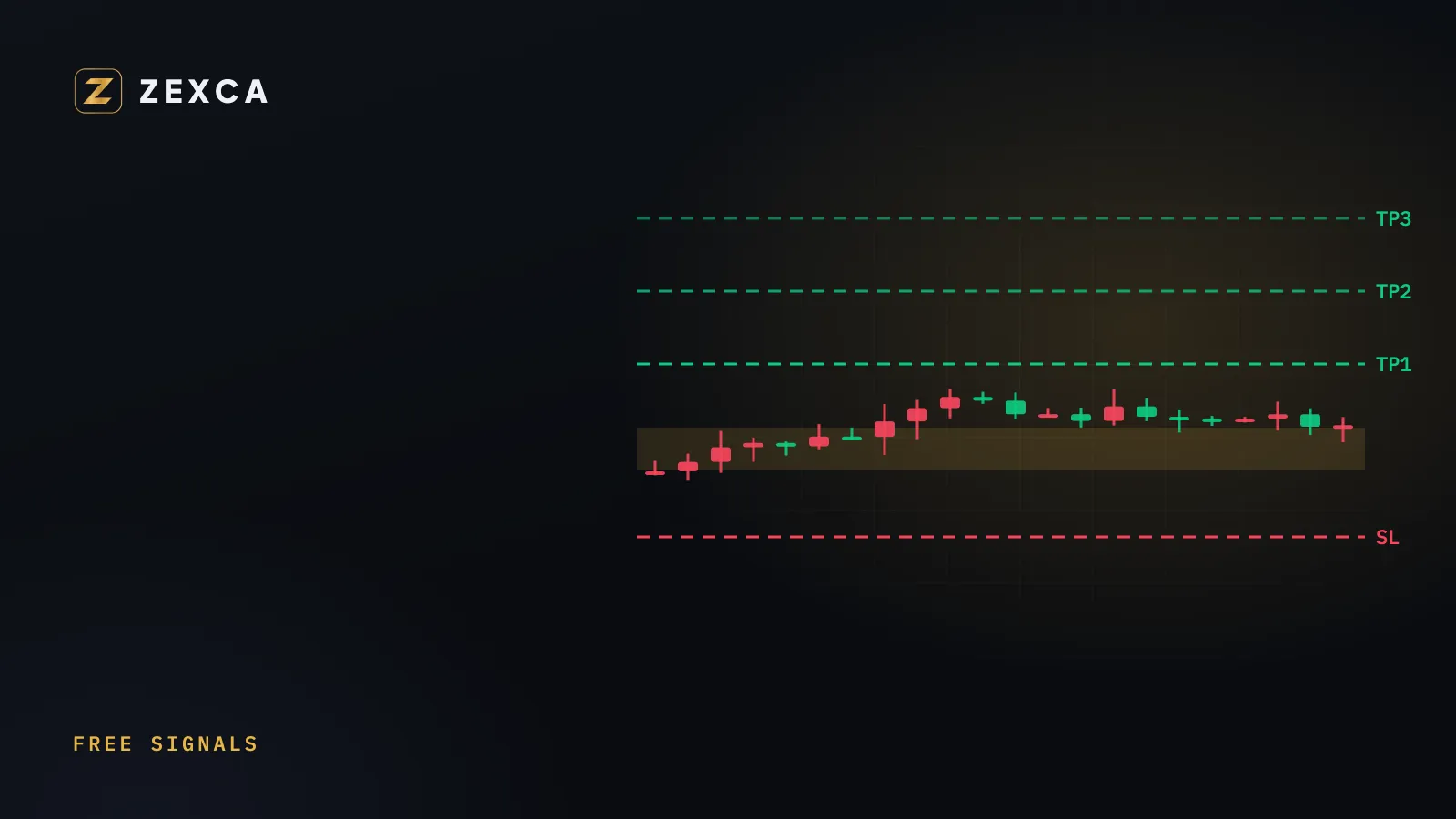
When the call is buy or sell, the analysis gives three prices:
- Entry: where the setup starts. If price has already run far past it, the setup is gone; do not chase.
- Stop loss: where the idea is wrong. If price gets there, the trade is closed. Our guide to the stop loss explains why it comes first.
- Take profit: where the move is expected to run out.
Every one of these prices is checked against the real chart before you see it. A level the market has not been near recently is removed rather than shown, so the numbers you read are ones the chart actually supports.
3. Risk to reward
From those three prices Zexca computes the R:R: how much you stand to make for each unit you risk. 1:2 means the target is twice as far as the stop. It is calculated from the prices, never guessed.
As a rule of thumb, a setup under 1:1.5 has to be right very often to pay. See risk-to-reward explained for the maths.
4. The reasoning
Above the plan, the analysis explains itself: what the chart's structure shows, the support and resistance it is working from, and the context around the move. Read it. If the reasoning does not convince you, the numbers should not either.
How to use one analysis well
- Pick the timeframe you will actually trade. A 15-minute setup is for the next hours, not the next week.
- Look before you ask. Mark the levels you see first, then compare. It is the fastest way to learn.
- Size from the stop. Decide how much you can lose if the stop is hit, and size the position from that.
- Try it on a demo desk first. Zexca's demo desks run on live prices with virtual money: place the plan there and watch it play out.
- Reopening is free. The same chart in the same language reopens its last analysis at no cost for 15 minutes, and finished analyses stay in the list beside the button for 48 hours.
How many you get
A free signal account includes one AI analysis. Filling your five stars adds ten more. See the five-star bonus. After that, analyses come in packs of four for one Z Coin.
An analysis is a reading of the chart, not personal financial advice. The decision and the risk are always yours.
Educational content, not investment advice. Trading carries risk, including the loss of capital.